
SEARCH THE
FOR
BLOG & NEWS
6 Books for International Day of Forests


Tuesday, March 21, is the International Day of Forests. Forests make up an essential part of the Canadian landscape and are critical to our ecosystem. Muskoka is particularly known for its beautiful forests and natural landscapes that people come from far and wide to see. Forests also provide more than just a great spot to camp, they purify water, clean the air, capture carbon to fight climate change, provide food, life-saving medicines, and much more. To celebrate trees, we have highlighted some forest related books that are available in our collection for you to enjoy.
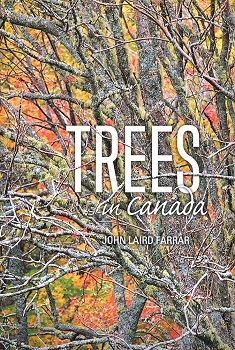
Trees in Canada
By John Laird Farrar
Trees in Canada is the most comprehensive book on the trees of Canada and the northern United States ever published and is an essential tool for the amateur naturalist and forest science professional, landscape architect, student, or teacher, and a collectible for all those fascinated by trees and forests.
Trees in Canada is the most comprehensive book on the trees of Canada and the northern United States ever published and is an essential tool for the amateur naturalist and forest science professional, landscape architect, student, or teacher, and a collectible for all those fascinated by trees and forests.
It boasts nearly 600 color photographs and 1600 drawings of features useful for identification of the tree species. Also included are 136 range maps and color maps of Canada’s forest regions and plant hardiness zones.
The author has ingeniously organized the more than 300 tree species into 12 groups based mainly on leaf shape and arrangement along the twig. The features that define the 12 groups require little botanical knowledge to recognize and are easily observed.
An identification key inside the front and back covers comprises an icon (a stylized drawing) for each group, a statement of the group ‘s essential features, and a numbered thumb tab, which allows rapid entry to the group. Dichotomous keys for the groups and large genera and winter keys for broadleaf trees and deciduous conifers are also provided.
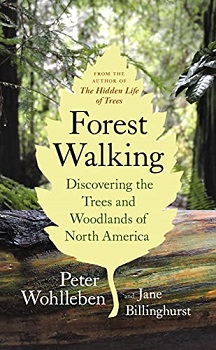
Forest Walking: Discovering the Trees and Woodlands of North America
By Peter Wohlleben
When you walk in the woods, do you use all five senses to explore your surroundings? For most of us, the answer is no–but when we do, a walk in the woods can go from pleasant to immersive and restorative. Forest Walking teaches you how to engage with the forest by decoding nature’s signs and awakening to the ancient past and thrilling present of the ecosystem around you.
When you walk in the woods, do you use all five senses to explore your surroundings? For most of us, the answer is no–but when we do, a walk in the woods can go from pleasant to immersive and restorative. Forest Walking teaches you how to engage with the forest by decoding nature’s signs and awakening to the ancient past and thrilling present of the ecosystem around you.
What can you learn by following the spread of a root, by tasting the tip of a branch, by searching out that bitter almond smell? What creatures can be found in a stream if you turn over a rock–and what is the best way to cross a forest stream, anyway? How can you understand a forest’s history by the feel of the path underfoot, the scars on the trees along the trail, or the play of sunlight through the branches? How can we safely explore the forest at night? What activities can we use to engage children with the forest?
Throughout Forest Walking, the authors share experiences and observations from visiting forests across North America: from the rainforests and redwoods of the west coast to the towering white pines of the east, and down to the cypress swamps of the south and up to the boreal forests of the north.
With Forest Walking, German forester Peter Wohlleben teams up with his longtime editor, Jane Billinghurst, as the two write their first book together, and the result is nothing short of spectacular. Together, they will teach you how to listen to what the forest is saying, no matter where you live or which trees you plan to visit next.
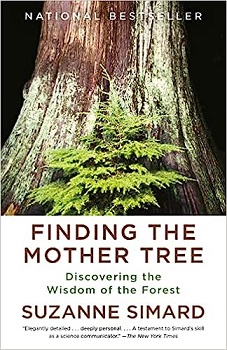
Finding the Mother Tree: Discovering the Wisdom of the Forest
By Suzanne Simard
A world-leading expert shares her amazing story of discovering the communication that exists between trees, and shares her own story of family and grief. Dr. Suzanne Simard was born and raised in the rainforests of British Columbia and has forged a lifelong relationship of love and respect with the trees. This relationship was the driving force behind her decision to dedicate her life to better understanding the forest and the network that connects the plant life within.
A world-leading expert shares her amazing story of discovering the communication that exists between trees, and shares her own story of family and grief. Dr. Suzanne Simard was born and raised in the rainforests of British Columbia and has forged a lifelong relationship of love and respect with the trees. This relationship was the driving force behind her decision to dedicate her life to better understanding the forest and the network that connects the plant life within.
With humour, emotion, and the narrative drive of a lifelong storyteller, Dr. Simard takes readers on an intimate journey of groundbreaking scientific discovery. Linking her research to her personal experiences, she recounts her life’s work uncovering the “Wood Wide Web,” the underground mycelium network that connects all the trees and plants within a forest. It is a network that allows them to share not only nutrients, but information, all of which originates from the hubs called Mother Trees. Readers will journey with Dr. Simard into this massive experiment, from dramatic encounters with wildlife to the groundbreaking “Aha” moments in a lab, from learning how to utilize this network to promote plant growth to what this network can teach us about combatting climate change. Dramatic, funny, touching, and evocative, Finding the Mother Tree offers an intimate and personal look at discovery. This book is not about how we can save the trees, but about how the trees might actually save us.

A Field Guide to Eastern Forests, North America
by John C. Kricher
This field guide includes all the flora and fauna you’re most likely to see in the forests of eastern North America. With 53 full-color plates and 80 color photos illustrating trees, birds, mammals, wildflowers, mushrooms, reptiles, amphibians, butterflies, moths, beetles, and other insects.
This field guide includes all the flora and fauna you’re most likely to see in the forests of eastern North America. With 53 full-color plates and 80 color photos illustrating trees, birds, mammals, wildflowers, mushrooms, reptiles, amphibians, butterflies, moths, beetles, and other insects.
John Kricher is Professor Emeritus of Biology at Wheaton College, Norton, MA, where he taught ecology, ornithology, and vertebrate evolution for 48 years. He has served on the board of the American Birding Association.
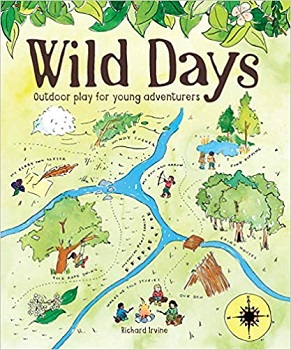
Wild Days: Outdoor Play for Young Adventurers
By Richard Irvine
Perfect for inspiring kids to get out in the fresh air, this brilliant book is crammed full of outdoor activities and fun for children. As well as gaining some simple survival skills, children will learn more about the world around them and their place within it.
Perfect for inspiring kids to get out in the fresh air, this brilliant book is crammed full of outdoor activities and fun for children. As well as gaining some simple survival skills, children will learn more about the world around them and their place within it.
Practical, creative and educational, the tasks concentrate on leaving only a positive trace, while enjoying the great outdoors.
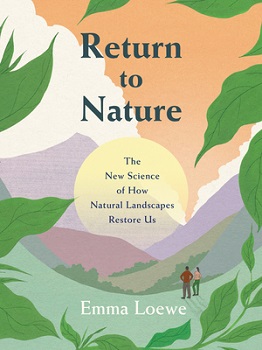
Return to Nature: the new Science of how Natural Landscapes Restore us
By Emma Loewe
Discover the new science and ancient wisdom on why nature makes us healthier and happier in body and soul from the co-author of The Spirit Almanac and mindbodygreen’s Senior Sustainability Editor. For centuries, we have known that getting outside is good for us. Yet we have become increasingly disconnected from the earth that nourishes us, with most of us spending 87% of our days indoors.
Discover the new science and ancient wisdom on why nature makes us healthier and happier in body and soul from the co-author of The Spirit Almanac and mindbodygreen’s Senior Sustainability Editor. For centuries, we have known that getting outside is good for us. Yet we have become increasingly disconnected from the earth that nourishes us, with most of us spending 87% of our days indoors.
In response, writer and environmentalist Emma Loewe demonstrates the power of nature’s healing properties in a guidebook organized by eight landscapes. In each chapter, you’ll find research-backed ways to explore that landscape right now and protect it in the future, so that it can be healthy and nurturing for generations to come. Drawing off modern science and innate wisdom, she uncovers:
Why being by the ocean makes you measurably happier How living near greenery helps you lives longer The staggering, illuminating statistic that forests can make you more relaxed within 90 seconds of walking among trees.Alongside beautiful four-color illustrations that inspire us all to get outside in big and small ways, this stunning book–more urgent than ever–will appeal to anyone looking to connect with the world around them, whether in their neighborhood park or on a backpacking getaway.